

Deciding how to fund your retirement can feel hard. You must make moves today based on what might happen decades down the road. For most working professionals, the biggest choice on the board is deciding between a Traditional 401(k) and a Roth 401(k).
And the decision finally comes down to one single question: Do you want to pay taxes now, or do you want to pay them later?
Since the financial landscape is taking a sudden shift, living costs are getting high, and tax laws are always evolving. Choosing the right account is very important for your annual financial planning. Neither option is universally superior. The right choice of retirement account for you depends entirely on your current income, your retirement goals, and where you think tax rates are headed.
What is the difference between traditional 401(k) contribution and roth 401(k) contribution
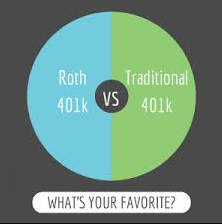
In simple terms, traditional 401(k) contributions are money you contribute before it’s taxed. This effectively reduces your taxable income for the current year. Your contributions increase on a tax-deferred basis. When you retire, you will have to pay taxes on your withdrawals.
On the other hand, with a Roth 401(k), the contribution is only made after you’ve already paid taxes on it. Basically, you pay taxes on the time when you contribute to your Roth IRA account, so there’s no tax break for the current year. However, when done correctly, withdrawals from a Roth 401(k) in retirement are completely tax-free. This also includes your income.
For 2026, Roth and traditional 401k have a combined contribution limit of $24,500 plus catch-up contributions for people age 50 and older. You can split your contribution between the Traditional and Roth plans, up to the combined limit.
What are the rules, limits, and the latest catch-ups on Roth 401 (k) and traditional Roth 401K?
Both accounts have the same contribution limits and regulations. You can choose one or split the funds between the two, but your total contributions cannot exceed the annual limit. Contribution limits provide an important opportunity to save for retirement.
- Basic contribution limit: You can contribute up to $24,500 per year.
- Standard additional limit: If you’re 50 or older, you can contribute an additional $8,000
- For a total limit of $32,500, additional catch-up limit: Recent legislative changes allow those who are aged 60, 61, 62, and beyond to benefit from an increased catch-up limit of $11,250 on total annual contributions.
Why the Traditional 401K might be the best option for you?
Choosing a traditional 401K can be the best option because it can optimize your current cash flow and reduce the tax liabilities later in life. This might best suit you when:
You are in your highest earning years: If you’re a high-earning professional with a high salary, you’re likely in a high federal tax bracket. So, contributing to a traditional 401(k) takes up to $24,500 out of reach of the IRS. If you’re in the 32% tax bracket, maxing out your pre-tax 401(k) could save you nearly $7,840 on your current federal tax bill.
They expect lower retirement income: Most people notice a reduction in their spending once they stop working. Perhaps your mortgage is paid off, your children are independent, and you no longer need to save for retirement. If you plan to live on a smaller annual budget in retirement than your current salary, your future tax bracket will be lower. It makes perfect mathematical sense to avoid paying taxes now at a high rate and instead pay them later at a lower rate.
You Live in a High-Tax State: State income taxes heavily influence this math. For example, you currently live and work in a high-tax state like California, New York, or New Jersey, a Traditional 401(k) shields you from both federal and high-tax state. If you plan to relocate to a tax-friendly retirement place like Florida, Texas, or Nevada, you can withdraw that money later without ever paying state income tax on it.
When should you choose a Roth 401 (k) for your retirement?
The Roth 401(k) can be a great option because it prioritizes long-term tax freedom and eliminates future tax uncertainty. You can choose a Roth 401 (k) account if:
You are at the starting point of your career: If you are an aspiring professional or a fresher, your income is likely at its lowest. And that automatically puts you in a lower tax bracket; the immediate tax deduction from a traditional 401(k) provides minimal financial benefit. By paying a lower tax rate now, you can earn decades of compound growth on your investments and get them completely tax-free later.
Want to protect yourself from tax increases? Federal income tax rates are historically low compared to past decades. Given the nation’s growing debt and changing political climate, many financial experts believe that eventually increasing federal tax rates will be necessary to stabilize the economy. A Roth 401(k) locks in your current tax rate and protects your retirement savings from future statutory tax increases.
Maximum withdrawal flexibility and legacy scheduling: Having a huge pre-tax retirement account can sometimes backfire. If you need to withdraw a large lump sum in retirement to buy a house, renovate a home, or pay for a medical emergency, withdrawals from a traditional 401(k) could inadvertently push you into the highest tax bracket. It can also increase your Medicare premiums.
The plus point is that Roth withdrawals do not count toward your taxable income, which gives you total spending flexibility. Additionally, recent tax updates have eliminated required minimum distributions (RMDs) for Roth 401(k)s. Because you don’t have to withdraw any money, you can pass on an intact, tax-free financial legacy to your heirs.
The hybrid approach: you don’t really have to choose between the two
Choosing a retirement account and managing your contributions is not easy, and yet you don’t have to make all-or-nothing decisions. At this stage, taking help from a professional tax planning financial advisor can be most helpful. Many professionals argue that. The smartest financial strategy often involves tax diversification.
You can simply split your contribution into two accounts, both traditional 401K and roth 401K. This will make you a distinct bucket of wealth. In retirement, this hybrid model gives you complete control over your taxable footprint. For example, you can withdraw money from your Traditional 401(k) up to the limit of the lowest federal income tax bracket. If you need additional income that year, you can pull the remaining funds from your Roth 401(k). This allows you to maintain a comfortable lifestyle while intentionally keeping yourself in a minimal tax bracket.
Final verdict: The final choice depends on your current financial situation and your future goals.
Choose a traditional 401(k) if you need immediate tax deductions, earn a high salary, or plan to retire in a lower-tax environment. Choose a Roth 401(k) if you’re currently in a lower tax bracket, want to compound the interest for your future, or you simply want to fully predict your taxes in retirement.
FAQs: Frequently Asked Questions
Question 1. I am a young working professional. Can I contribute to both traditional roth 401K and roth 401K in the same year?
Answer. Yes. You can split your contributions between Traditional and Roth 401(k) accounts to hedge your bets and build tax diversification. But remember that the combined total of your contributions cannot exceed the annual IRS limit.
Question 2. What are the IRS limitations for the contribution fi Roth 401K account?
Answer. As of 2026, the maximum you can contribute to a 401(k) is $24,500. And if you are 50 and older, you can contribute $8,000 extra.
Question 3. Are there income limits for contributing to a Roth 401(k)?
Answer. No. Roth 401(k) has no income restrictions. However, there are IRS limitations to contributing to your retirement Roth accounts. That should be kept in mind.
