
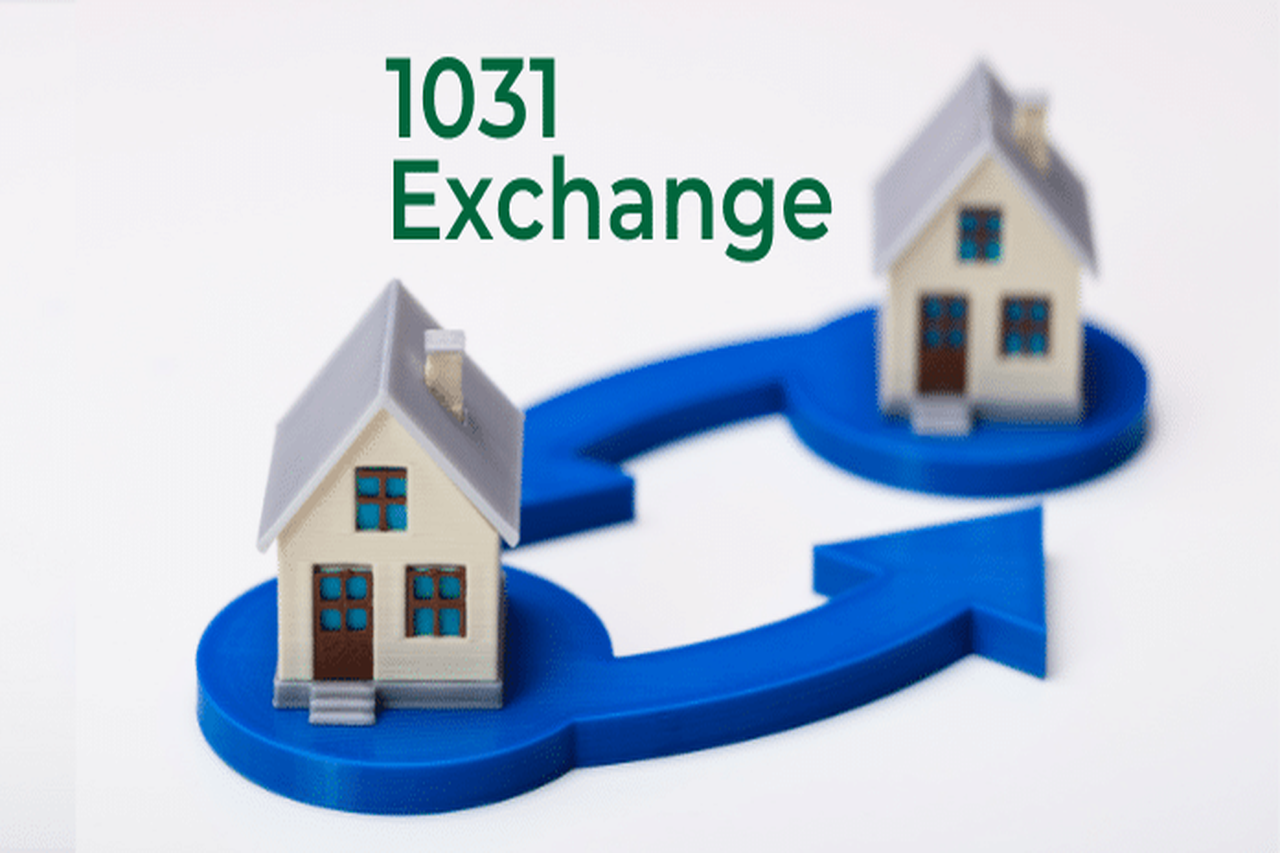
Selling a property with a large profit is a great feeling. But at the same time, giving a large amount of the profit to the government feels horrible as well.
The good news is that you do not need to pay those high taxes today, so many smart real estate investors have a legal way of keeping most of their assets, providing returns for themselves. It’s called the 1031 exchange.
What is a 1031 exchange?
The 1031 exchange got its name from section 1031 of the IRC (Internal Revenue Code) for tax. Basically, it is a way to postpone the capital gain taxes. In other words, it is also something referred to as a like-kind exchange.
This means you can sell an investment property, buy a new one, and move all your profits directly into the new purchase. The IRS will not take a single dollar of your gains during this swap.
The best part? You can do this over and over again, your entire life. By continuously rolling your profits over, you can grow a small investment into a massive real estate portfolio.
How the 1031 Exchange Rules 2026 Actually Work
Although a 1031 exchange is straightforward, it can be unforgiving when executed improperly. A single error can cause a cascade of other events leading to a failed transaction.
Step 1: Make Sure Your Property is Eligible: To qualify for a 1031 exchange tax deferral, the property you sell must be used for rental or business purposes. Your primary residence is not eligible. Any other home that is not related to business is not eligible. The IRS usually verifies for the purpose of renting, using, or investing in something for an extended period of time, etc.
Step 2: Sell to a Qualified Intermediary: The second most critical rule of the 1031 exchange rule 2026 is do not touch the money. Not even for a second.
You must hire a Qualified Intermediary (a neutral third party) before closing the sale. The QI holds the profits in a secure escrow account and transfers them directly to buy the new property. If the money touches your personal bank account for even one second, your entire 1031 exchange will be disqualified immediately, and you will owe tax on the full amount of your profit.
Step 3: Identify Your Replacement Property in 45 Days: Once you’ve completed the sale of your old property, the timer starts on a 45-day window during which you must identify, in writing, the property or properties you wish to acquire.
You can identify as many as three properties without any consideration of value. If you want to list more than three, their combined total market value cannot exceed 200 percent of the original property’s sale price. This list must be an official document. It needs your signature, the date, and must be sent directly to your qualified intermediary. Casual text messages or verbal agreements with your real estate agent will fail IRS inspection.
Step 4: Next Purchase Within 180 Days: You must legally close the purchase of your replacement property within 180 days from the date your original property was sold. This timeline runs parallel to your 45-day window, meaning it does not reset.
This cutoff is absolute, and the IRS grants zero exceptions for market shifts, financing delays, or personal issues. If you fail to satisfy this deadline, your exchange will be unsuccessful, and the IRS will expect you to pay the capital gains tax immediately.
Step 5: Reinvest All Proceeds and Buy Equal or Greater Value: To successfully defer 100% of your capital gains tax, you must reinvest the entire amount of cash you received in the sale of the relinquished property. Furthermore, the replacement property must be of equal or greater value to the property you sold.
If you pull any profit out of the exchange, also known as “the boot”, the amount will become taxable. If you purchase a replacement property for less than the price you received for the property you sold, that difference is taxable.
The Reality Check 2026. So what has changed?
The main rules for 2026 have not changed, but the IRS is checking paperwork much more strictly now. Tax checkers are actively looking to catch and penalize errors in three main areas:
- Personal Use: If you have treated property as an investment yet used it personally more than 14 days a year, the IRS can deem the exchange invalid.
- Related Party Exchanges: You can trade property with a family member or business associate, but each of you must hold the property for at least 2 years, or the exchange can be unwound.
- Improvement Exchanges: Building or updating real estate using your tax-deferred exchange money is fully legal, but tracking construction timelines and required documentation is strictly monitored.
Three creative ways investors can use 1031 exchanges in 2026
- Reverse Exchange: You may be in a heated market and find a new replacement property before listing your current one for sale. A reverse exchange is a technique that allows you to purchase a new property before selling your old property. The new property can be held by an EAT “exchange accommodation titleholder” for a period of up to 180 days while you sell your current property. While it can be complicated and expensive, it remains an option that is completely legal under the Internal Revenue Code.
- Improvement Exchange: You discover a distressed property in a great location at a very low price, but it requires a lot of work to bring it into a useful state. The improvement exchange allows you to utilize your exchange funds not only for the acquisition cost of the property but also for renovation and construction costs associated with the property and tenant improvements. This allows an investor to convert an income-producing stabilized asset into an income-producing value-add opportunity.
- Vacation Home Exchange: You may be able to exchange a vacation home for an investment property, but the vacation home must first be converted to a pure investment property before the 1031 exchange. For 1031 exchanges performed in 2026, the IRS requires that you rent out your vacation home at fair market rent for a minimum of 12 months and that you do not use the vacation home for anything other than normal maintenance during that time period. This technique can be very high-risk.
Avoid these common mistakes when you are filing for a 1031 exchange:
So many times, even experienced investors fall into this pitfall, so make sure that you remain careful. The common mistakes you must avoid are:
- Choosing a bad intermediary: the qualified intermediary (QI) industry is self-regulating and hasn’t received a lot of government scrutiny. This leads many QIs to become bankrupt or engage in fraudulent activities, taking client funds with them. Before selecting your QI, have as thorough a vetting process as if you were selecting a doctor.
- Failing to Complete the 45-Day Task: When you are in the process of completing a 1031 exchange, you must identify a replacement property in writing by the end of Day 45. If you don’t send the identification of your new property by Day 45, your exchange is complete.
- Accepting Cash for Repair Costs: If you plan to spend money on repairs to your new property, that money cannot come from your 1031 exchange funds unless you complete the repairs before taking title to the property. If you take title and later pay to repair the property, the cash received to repair the property is taxable to you as a boot.
- Using Non-Disqualified Assets: When you use a rental duplex as your relinquished property and swap that property for raw land, you qualify for a 1031 exchange. However, it is against the rules to swap a rental duplex for a partnership interest in a real estate venture; a partnership interest is excluded from qualifying for a 1031 exchange.
Final thought: The 1031 exchange rules of 2026 offer an incredible way to build generational wealth. Instead of losing your profits to taxes, you use that same money to buy larger, better assets.
The strategy is simple, but the execution must be perfect. The broad definition of properties gives you freedom, but the 45-day and 180-day clocks are completely unforgiving. Work with a solid team, watch the calendar, and keep your investment momentum going strong.
FAQs: Frequently Asked Questions
Question 1. Can I hold the cash from the sale myself?
Answer. No. You must use a neutral third party known as a Qualified Intermediary (QI) to hold the funds between the sale and the purchase. If you touch the money directly, the exchange is disqualified, and the entire capital gain becomes taxable. Question 2. Is there any required time for holding the replacement property?
Answer. Although the IRS does not specify any minimum time for holding the replacement property, it is a generally accepted best practice to hold both the relinquished property and the replacement property for two years or more in order to justify that. They were bought as an investment and not for quick resale.
Question 3. Within what timeframe do I have to find and purchase the replacement property?
Answer. There are two strict rules by the IRS:
- The 45 Day Rule: You must identify potential replacement property in writing within 45 days of the sale of your relinquished property.
- The 180 Day Rule: You must close on the replacement property within 180 days of the sale of your relinquished property (or the due date of your tax return, whichever comes first).
